Skip to content

Seasonal Changeovers and Peak Foot Traffic

A vestibule that changes with the weather and handles the busiest weeks of the year.

Built for New York's in-between seasons

Spring and fall in New York don't follow a schedule. Mornings feel like winter, afternoons feel like summer, and by dinner you're back in a coat. When the entrance is either wide open or fully sealed, a business misses a lot of those almost-outdoor days people love.

Without a buffer, the door lets in a draft every time it opens, the floor gets slick from rain and street grime, and people crowd the doorway and block the sidewalk. Guests shivering at the host stand don't order another drink, and staff working the door feel it all day.

A vestibule designed for change gives you a middle ground. It keeps guests out of the wind and rain without losing the open, street-connected feel. It also gives you a way to handle the weeks when the sidewalk is packed, whether that's tourist season, the holiday rush or a busy brunch.
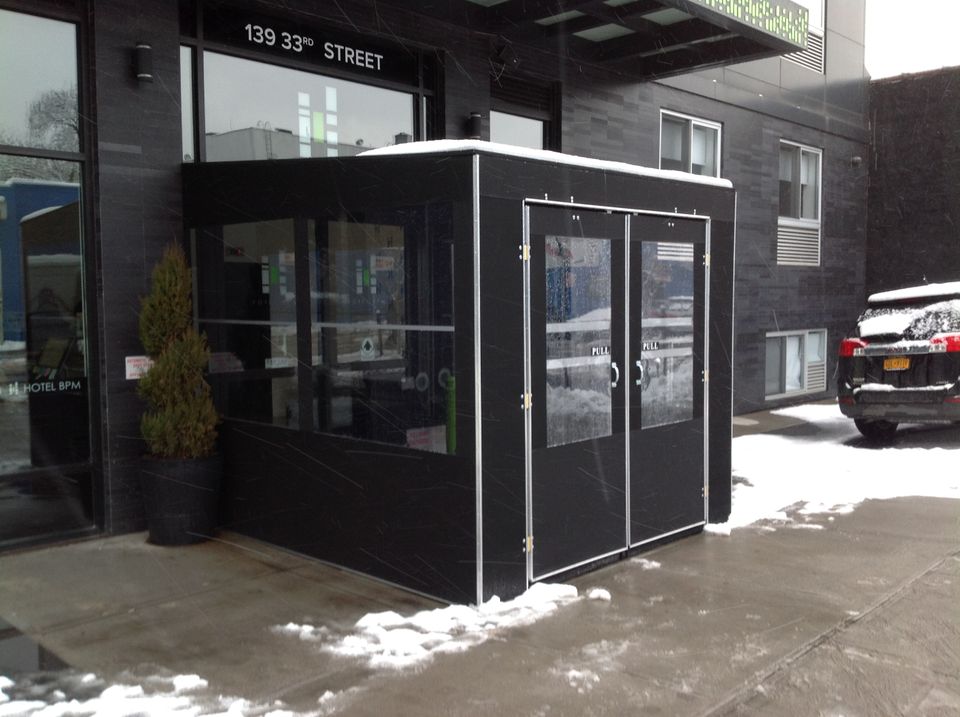
Black framed seasonal vestibule with double glass doors at a New York City building entrance, snow on the sidewalk

Modular panels that change with the weather

A modular vestibule is a core frame with panels that can be added, removed or rearranged, so you aren't stuck with one setup from October to April. With modular panels you can:
 
  • Run a full enclosure on cold, windy days
  • Pull off or swing back side sections when the sun comes out
  • Keep a shallow footprint on a busy sidewalk
  • Change the layout over time as the business changes

It saves work in the long run, too. You keep the frame and swap pieces instead of replacing the whole structure, and a damaged panel means replacing one section, not starting over.

Different businesses use it differently. A restaurant might run a deeper enclosure in late fall to protect outdoor seating, then drop a few panels in spring for the breeze. A boutique or salon might use a partial enclosure to cut wind and street noise so the door can stay open without a draft reaching the back. An office can shield the lobby so visitors aren't standing in the rain.

Common materials are clear vinyl panels that roll or zip up, rigid polycarbonate for impact resistance, and aluminum framing that's strong but light enough for seasonal change-outs.
View Our Vestibules

Openings you can adjust during the day

A vestibule works best when it doesn't feel sealed and stuffy. Adjustable openings let you fine-tune comfort all day without taking anything down:
 
  • Zip-up windows that roll and strap into place
  • Large roll-up front panels for warm afternoons
  • Hinged vents high on the side panels to let hot air out
  • Sliding sections that stack to one side

Airflow keeps the space from feeling cramped, which matters most in dining areas and waiting zones. When guests feel a light cross breeze, they stay longer.

The openings have to work for the staff, too. Mechanisms should be simple, fast and tool free, so a host or server can adjust a panel in seconds during a rush without fighting a stuck zipper.
See our Vestibules

A seasonal panel playbook

Swap-in components take the idea further. Instead of one fixed layout, you keep interchangeable side walls, wind screens, fascia pieces and even different door styles ready for different parts of the year. A simple schedule might look like this:
 
  • Early spring: full height side panels with several zip windows
  • Late spring: remove some full panels and switch to half height wind screens
  • Early fall: add coverage back, especially on the windward side
  • Deep winter: reinstall the full panels and any extra weather edges

For this to work, panels should stack flat and be easy to label and store, with handles or simple brackets for moving them. Choose materials that won't crack, yellow or warp going in and out of storage.

Swap-in panels are also an easy way to refresh graphics without rebuilding. A panel insert can carry seasonal colors, a limited time promotion, updated hours, or a new logo if the brand changes.
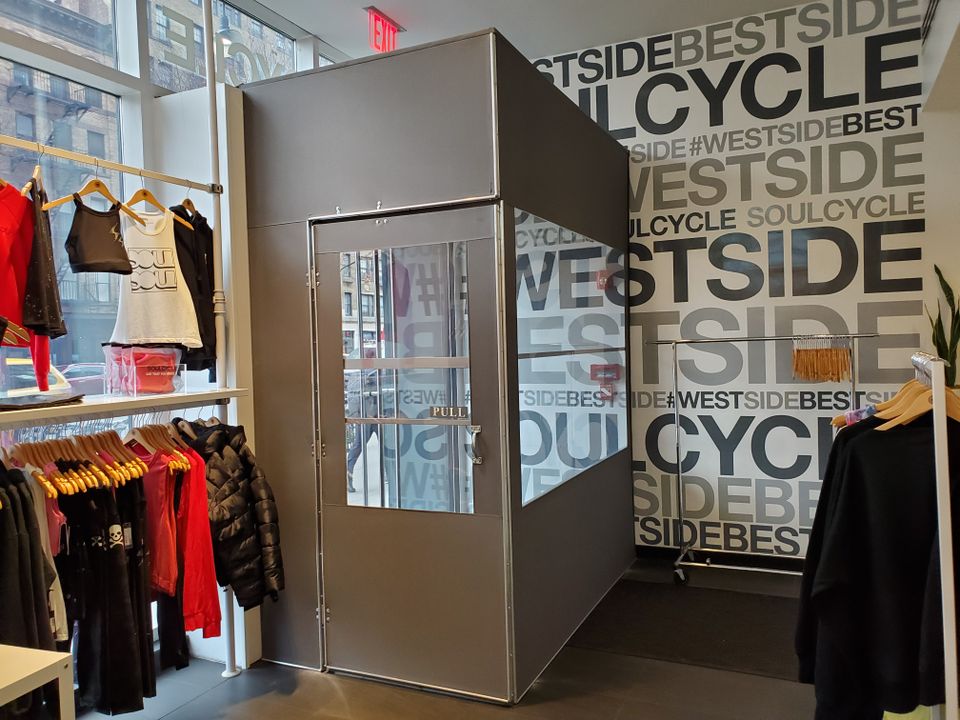
Brushed aluminum vestibule with a glazed door built inside a retail store entrance, photographed from the sales floor

Shaping the line at the door

On a busy block, the vestibule tells people where to enter, where to stand and where to line up before they read a single sign. It cuts down on door chaos: guests unsure which way to go, crowds blocking the sidewalk and the windows, and delivery drivers mixed in with the dine-in line.

Good layout does the directing quietly:

 
  • Angled doors that steer guests toward the host or the counter
  • Double doors that separate the way in from the way out
  • Short railings or planters that show where the line forms
  • A marked path or pickup shelf for delivery drivers, away from the main line

Accessibility has to be planned in from the start, with door widths that fit wheelchairs and strollers, enough turning space inside, and a clear path to the main entrance. Clear panels, soft even lighting and simple arrows help people feel guided without feeling pushed.

Plan for the peaks: where the line goes during the busiest hours, how to keep the sidewalk clear for the neighbors, and where takeout gets handed off.

Start planning before it gets cold

Design, measurements, approvals and fabrication all take time, and a lot of restaurants are planning at the same time. Starting in the warmer months gives you more options and a lot less stress when the temperature drops.

A simple checklist to start with:

 
  • Your look: colors, logo placement and the overall feel
  • Your space: available width, depth and height limits
  • Comfort: type of heat, door style and draft control
  • Seating: tables, a bar rail, a waiting area or a mix
  • Inspiration: photos of enclosures and streetscapes you like
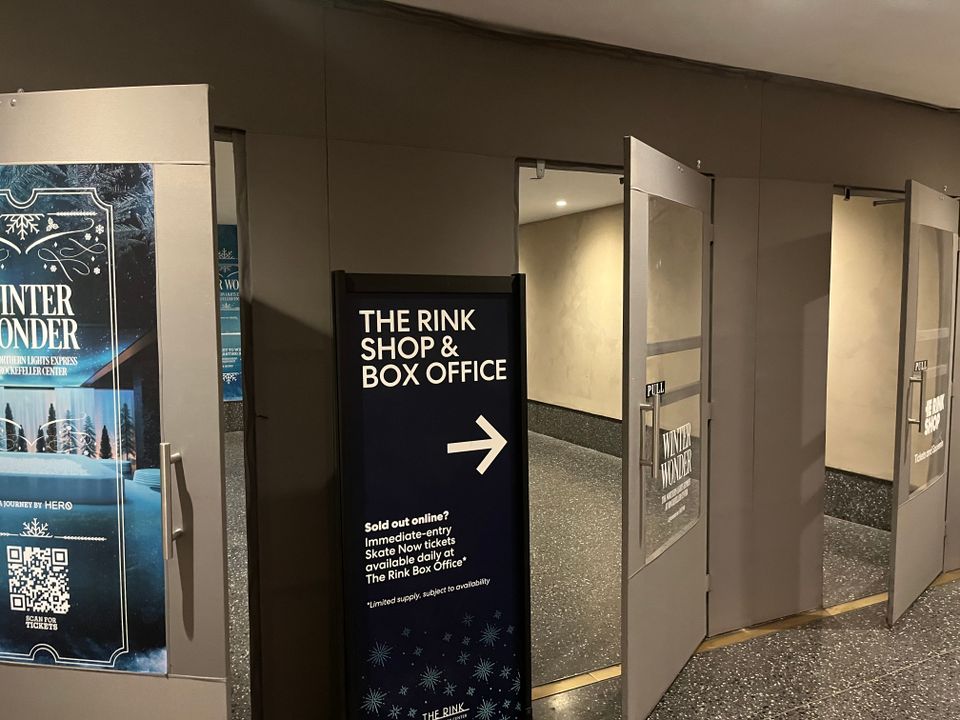
Brushed aluminum vestibule with a glazed door built inside a retail store entrance, photographed from the sales floor

Catching tourist traffic

Near Penn Station, Grand Central, Times Square, the Brooklyn Bridge and the big museums, sidewalks fill fast and people move in every direction. Scaffolding, street signs and crowds make it easy to miss a doorway. A well planned vestibule creates a pocket of order: it separates the entrance from sidewalk traffic, gives people a clear place to wait, keeps hot air out, and stops the door from slamming in the wind.

Visitors in an unfamiliar neighborhood scan quickly. If someone steps out of a station exit, can they tell what you offer in a few seconds? Put the name and logo on the vestibule, add lighting that stands out at dusk, and use a short line that says what you are, like "Coffee & Pastries" or "Souvenirs & Gifts." Clear or semi-clear panels let people see the activity, the menu boards and the staff inside, and that's what turns a glance into a stop.

For cafés and shops, the vestibule can also preview what's inside, with grab-and-go shelves, seasonal merchandise, or a sign that shows where to order and where to line up.

Summer promotions on the vestibule

A restaurant vestibule doesn't have to disappear when the snow melts. In summer it can block hot gusts and exhaust, give the host an organized place to greet guests, and double as a marketing space every person walking by will see.

Interchangeable graphic skins, fabric or vinyl panels that slide, snap or zip onto the frame, let you keep up with a fast summer calendar: a spritz menu one month, a seafood special the next, weekend brunch all season. Keep limited time graphics bold and simple, print them on weather resistant material, and size them to your actual frame so they can be wiped down, rolled up and reused next year.

Add a QR code that goes straight to the menu, the waitlist or takeout ordering, and give each promotion its own code so you can see which one people actually scan. One wall with big, readable type and a short campaign line makes a natural photo spot, as long as the floor stays clear and the doors and exits still work.

Rules, materials and planning ahead

Any vestibule on a New York sidewalk has to leave enough clearance for pedestrians, strollers and wheelchairs, keep level thresholds and room for doors to open fully in an emergency, and follow the landlord's rules on how it attaches to the facade. Weather barriers can be treated differently from permanent structures, and certain sizes or attachments may need permits. Landmark districts can add design limits.

Choose materials that resist yellowing, clouding and tearing, and hardware (zippers, hinges, fasteners) that still works smoothly after many seasons, not just the first. Vinyl is easier to move and store. Glass or polycarbonate panels look cleaner and more permanent.

Start before the first cold snap. Walk the entrance from inside and out, note where the drafts hit and where people bunch up, and measure the door swing, the sidewalk and anything nearby. Then leave time for design, any approvals and installation before the evenings turn cold.

Frequently asked questions

What is a restaurant winter enclosure?

A covered outdoor dining structure that protects guests from cold, wind, rain and snow. In New York it also works as a visible extension of the dining room, the storefront and the brand.
 

Why do diners notice some enclosures and walk past others?

People make quick decisions in the cold, and a warm, well lit enclosure signals comfort from a distance. Clear panels, inviting light and a clean structure look more welcoming than a cloudy or neglected setup.
 

How do I make an enclosure feel warmer?

Safely placed heaters, tightly sealed panels, doors that close securely, and seating kept away from drafts. Warm lighting and heaters guests can see reassure them before they sit down.
 

What's the difference between a winter tent and a branded enclosure?

A basic tent is purely functional and often looks temporary. A branded enclosure uses matching colors, logos, clear panels, lighting and a thoughtful layout, so it feels like part of the restaurant.
 

Can a winter enclosure be used in more than one season?

Yes. Modular panels, durable materials and branding that works year round let it adapt to spring and fall instead of sitting idle.

Ready for the next season?

Tell us about your entrance and your busiest times of year. We'll follow up to go over options and provide a clear, detailed quote.
Get a Quote