Skip to content

Street Noise and Storefront Vestibules

What a loud, drafty entrance costs a business, and how to turn the front door
into the calmest spot in the room.

The front door lets the whole street in

Picture a warm spring afternoon. Sidewalk cafés are full, delivery trucks are double parked, doors are propped open and the noise bounces between buildings. Your front door sits right in the middle of it, and every time it opens, all of that comes inside.

What a lot of owners miss is how much that steady wash of noise, wind and changing temperature affects the way people shop. When customers feel overwhelmed or uncomfortable, they move away from the entrance faster, browse fewer displays, cut conversations with staff short, and spend less.

A vestibule works as a buffer between the sidewalk and the room. It softens the street noise, cuts the drafts, and slows the rush of hot or cold air. That gives people a calmer place to step in, get their bearings and feel welcome instead of pushed.

What noise really costs

A loud entry changes behavior. People talk less with staff and with each other, rush their decisions, avoid the tables by the front window, and leave sooner than they planned. Shorter, rushed visits usually mean fewer impulse buys, less time spent in cafés, salons and small restaurants, and a lower sense of quality overall. A space that feels loud, drafty and a little chaotic doesn't feel premium.

The staff feel it too. People working the door, the host stand or a counter near the entrance end up raising their voices, repeating themselves, and taking gusts of air and street dust all day. Over time that wears them down and leads to small mistakes and slower service.

It gets worse in nice weather. Windows open, doors stay propped and sidewalk activity picks up. That's good for energy, but hard on comfort and focus.

A vestibule isn't just for winter

Most owners think of a vestibule as winter gear for keeping snow and cold out. That's only part of it. A well planned vestibule helps in every season:
 
  • Honking, sirens and sidewalk chatter hit a barrier before they reach your guests
  • Less dust and exhaust drift straight inside
  • Hot, humid summer air and cool spring and fall gusts get softened at the door
  • The heating and cooling system fights fewer sudden temperature swings

Shoulder seasons are tricky. May and October mornings start cool, middays get warm and evenings cool off again, and anyone near the entrance feels every shift. A vestibule keeps the temperature inside steadier through all of it.

It makes an impression, too. With clear panels, branded graphics, lighting and color, a custom vestibule looks like part of the storefront, not a temporary plastic box.
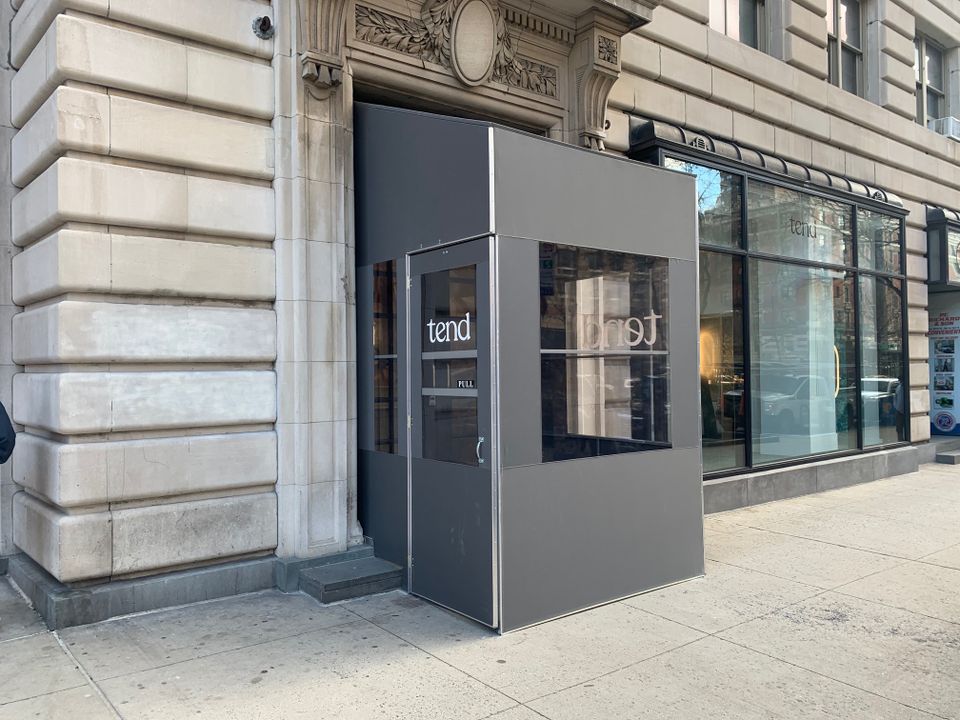
Grey aluminum framed vestibule with clear panels and white vinyl door lettering at the entrance of a limestone building

Designing for a busy street

A vestibule has to feel good to use, not just look good in photos. The layout decisions that matter most:
 
  • Door placement that leads people naturally from the sidewalk, into the vestibule, then inside
  • A door swing that works with foot traffic and the flow of the sidewalk
  • Enough room for strollers, wheelchairs and deliveries so no one feels squeezed

Clear panels keep the store open and connected to the street, while a tint can cut glare in bright locations. The framing, hardware and lighting should support the brand and keep the entrance bright instead of boxed in.

In a dense city, sidewalk width, building rules and local regulations all affect how big a vestibule can be and how it's anchored. A local fabricator who knows those conditions can handle the measurements, the layout and an install day on a tight, busy street.
View Our Vestibules
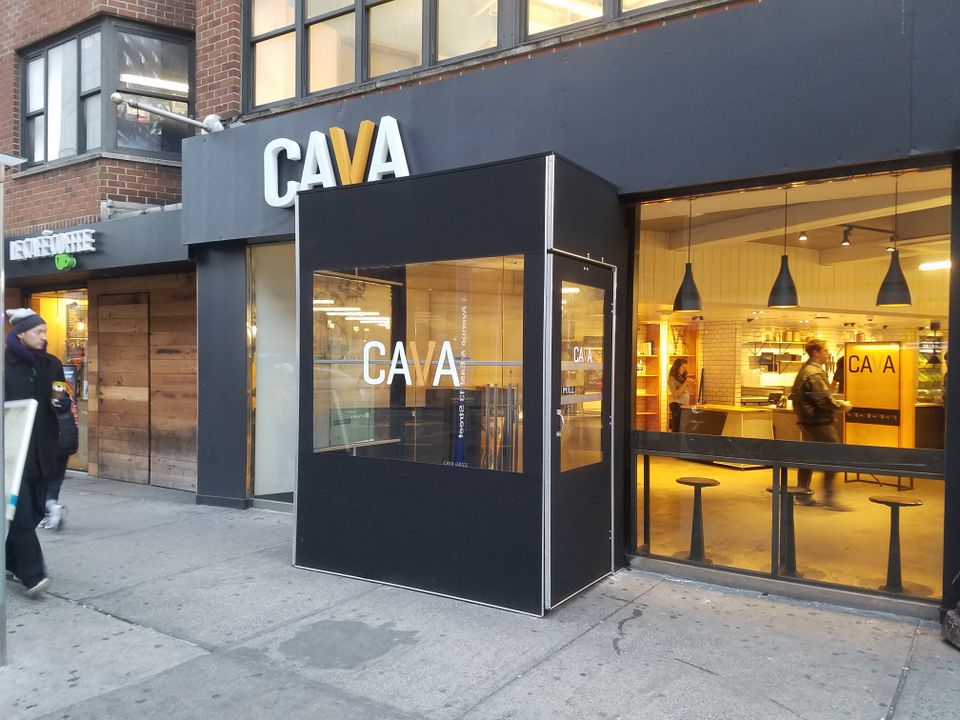
Black framed winter vestibule with a branded front panel enclosing a lit restaurant entrance on a city sidewalk

Working with your signs and awnings

A vestibule shouldn't look like an afterthought. When it works with the signs and the awning, the whole storefront tells one story. Match the colors and logo style across the vestibule panels, the awning and the main sign, keep the lettering consistent, and use door graphics that guide people to the entrance without clutter.

The combinations solve real problems. A vestibule plus an awning keeps the sun and rain off while the entry stays dry and clear. A vestibule plus an illuminated sign draws attention in the evening, when people are out later.

Every business needs something a little different. Restaurants need room for a host stand and a takeout line. Salons want a calm transition from a noisy street to a quiet room. Boutiques and medical offices tend to care most about clarity, privacy and a clean, professional look.
See Our Services

Is a vestibule right for your storefront?

Spend a few days paying close attention to the front door:
 
  • Stand near the entrance and notice the draft each time the door opens
  • Listen to how loud the street is at the host stand, the counter or the front tables
  • Watch how customers behave near the door, and whether they avoid those seats or hurry through
  • Ask the staff where they feel the noise and temperature most

The process itself is straightforward: a site visit to look at the entrance and measure, a design phase to settle the layout and materials, fabrication, then installation at a time that works for your hours and your neighbors.

You don't have to start with the most elaborate setup. Some owners begin with a simpler enclosure that solves the biggest problems, the noise and the drafts, then add branding, better materials or lighting once they see what works.

Frequently asked questions

What makes a vestibule ADA accessible?

Enough clear floor space for someone using a wheelchair or walker to approach, open the door and pass through, plus hardware that's easy to reach and operate, smooth thresholds, and room to turn and clear the door swing.
 

How can I make a narrow vestibule accessible without redesigning everything?

Protect the clear space at the door and along the main path, then look at the door swing and hardware. Changing the swing direction, using offset hinges, or moving closers and stops can add room without expanding the footprint.
 

Why are lever handles better than round knobs?

Levers and push or pull bars don't require tight grasping or twisting. Round knobs can be hard for people with limited hand strength, anyone wearing gloves, or someone carrying bags.
 

What NYC rules affect a vestibule on the sidewalk?

Rules often limit how far it can project and how much sidewalk has to stay clear. They can also require open exit paths, visibility through certain windows, and clear fire department access.
 

What's the difference between a seasonal enclosure and a permanent vestibule?

A seasonal enclosure goes up for the cold or wet months and comes down later, often in softer materials. A permanent vestibule has framed walls and doors, stays up year round, and may be reviewed under different requirements.
 

Can an accessible vestibule still look high end?

Yes. Large glass doors, slim metal framing and light colors make a small entry feel open, and minimal pulls in brass or black with low profile closers keep the lines clean.

Ready for a quieter entrance?

Tell us about your storefront and what the street is like out front.
We'll follow up to go over options and provide a clear, detailed quote.
Get a Quote