Skip to content

Rain-Ready Storefront Vestibules

Keeping a New York City entrance dry, safe and on-brand in bad weather.

A dry entrance starts at the vestibule

On a rainy afternoon, a storefront entrance turns into a splash zone. Umbrellas crowd the sidewalk, people rush by with their heads down, and anyone who stops to open your door gets wet. Inside, the first few feet of floor collect puddles, get mopped constantly, and become the likeliest place for someone to slip.

A vestibule is an enclosure at the entrance that creates a small covered space between the sidewalk and the inside door. It blocks wind and rain from blowing straight in, and it gives water from umbrellas and shoes somewhere to stay until it drains away. It also gives people a dry, calm spot to pause before they step inside.

That helps any business with a door that opens a lot: restaurants and cafés with short lines out front, boutiques that rely on window browsing, salons where clients wait a few minutes, and medical offices where a calm first impression matters. The difference comes down to a few details: drainage, the floor, and keeping moisture out of places you can't see.
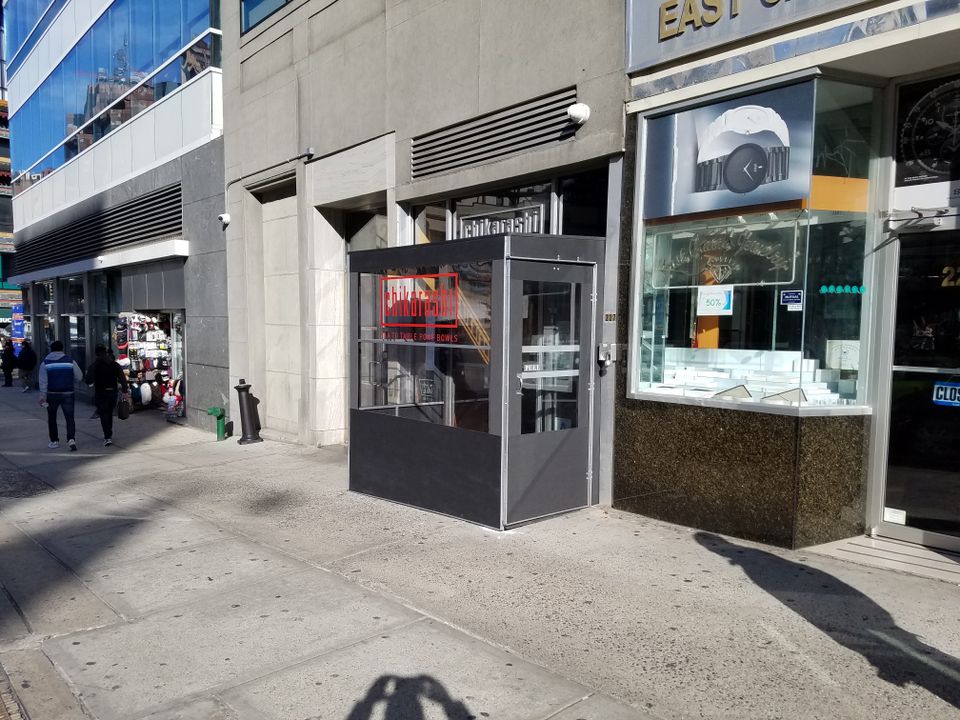
Compact dark grey vestibule with a clear glass door enclosing a single storefront entrance on a New York City sidewalk

Give the water somewhere to go

A flat vestibule floor collects water from umbrellas, shoes and the door swing. In a summer storm or a winter melt, that water has nowhere to go, so it spreads into puddles, tracks into the store, and wears down the floor and threshold.

Good drainage starts with the shape of the floor. Even a small slope makes a big difference. Common options:

A slightly sloped floor that sends water toward a drain at the threshold
A linear trench drain at the door line that catches water before it rolls inside
A connection to the building's existing drain line, where the setup and the rules allow it

This has to be planned before fabrication, not after. Decide where the water should collect and how it leaves. Choose drain grates that lift out easily, so they can be cleared of dirt and salt. Seal the area around every drain so water doesn't leak into the walls. Not every vestibule can tie into building plumbing, so any connection needs to be worked out with the landlord or building manager first.

Floors that stay grippy when wet

Smooth metal or plastic flooring feels fine on a dry day. Add rain, slush or even summer humidity and it turns slick, and one fast step is all it takes.

Think about grip before style:

 
  • Textured aluminum or steel plate with a pattern shoes can hold
  • Rubber or vinyl treads rated for wet, high traffic entrances
  • Commercial entrance mats made to soak up water at the door
 
A continuous slip resistant surface works better than a bare floor with a few small mats on top. Cover the whole walking path, not just the first step. Secure the mat edges or use a recessed mat well so corners don't curl up, and pick a darker or patterned finish that hides dirt between cleanings.

Upkeep matters too. Mop or squeegee after heavy storms, replace mats before they wear smooth, and plan a deeper cleaning before and after the cold months, when salt and grit build up.

Stopping the moisture you can't see

A floor can look dry while water sits in the seams, under the mats and inside the wall frames. Over time that leads to rust on metal parts, mildew on fabric, peeling finishes and warped thresholds. The damage usually shows up slowly and then all at once.

Stop it where the water gets in:

 
  • Weatherstripping, door sweeps and door bottoms that keep wind driven rain and slush from blowing under or around the doors
  • Sealed seams where the wall panels meet the floor
  • Drip edges or a small canopy that send water away from the openings

The vestibule also needs to breathe. A fully sealed box holds damp air for hours. Small vents let humid air out without making the space drafty, and openings sized and placed right help it dry out while keeping most of the rain out.

Materials make a difference over the long run. Use corrosion resistant metal where water and salt sit, commercial grade fabric or panels with a proper waterproof backing, and sealants that can take repeated freezing and thawing without cracking.
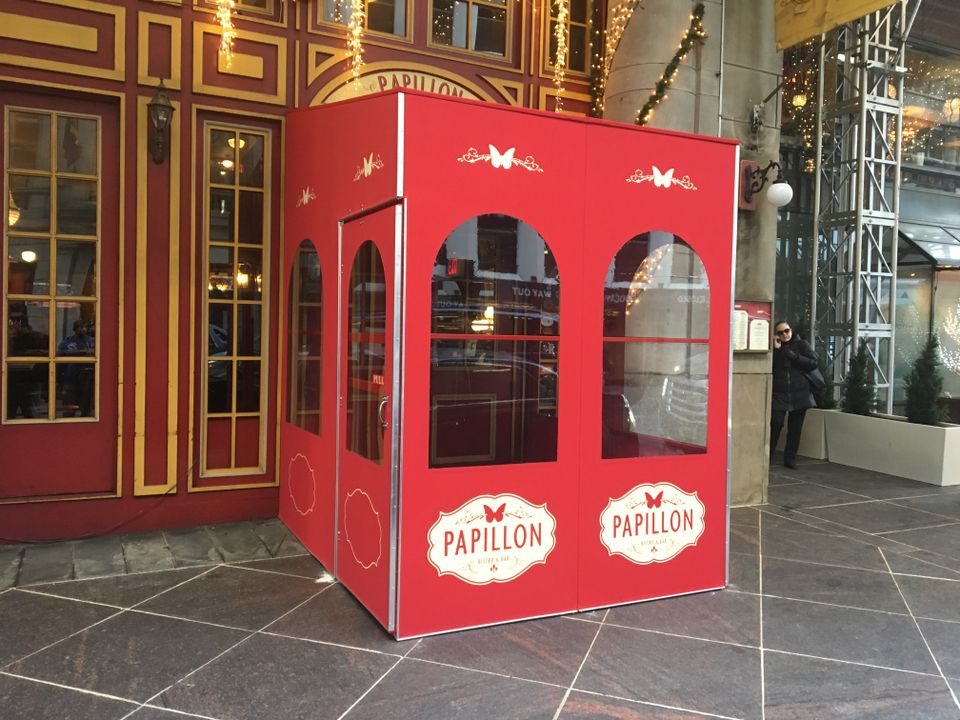
Red painted vestibule with arched windows and branded oval logo panels at an ornate building entrance

Looking like your brand on a gray day

A vestibule is often the first thing people see, so it should look like part of the storefront, not something put up when the forecast turned. Match the fabric or vinyl colors to your logo or awning, repeat your main font in the door lettering, and carry the overall style through, whether that's clean and minimal, warm and cozy, or bold.

Material matters more when everything is wet. Some fabrics streak or go dull in the rain, and some vinyls show dirt quickly. Coated fabric and vinyl that shed water, finishes that wipe clean and resist fading, and metal trim that holds up to moisture all keep the entrance looking sharp.

Clear side panels let in daylight, let staff see who's coming in, and show people on the street that you're open. Good lighting inside and around the vestibule makes the entrance feel safe at night, lights up your logo, and helps people find the right door in a downpour. Finish it with matching hardware, clean door pulls and a branded mat.
See Our Vestibules
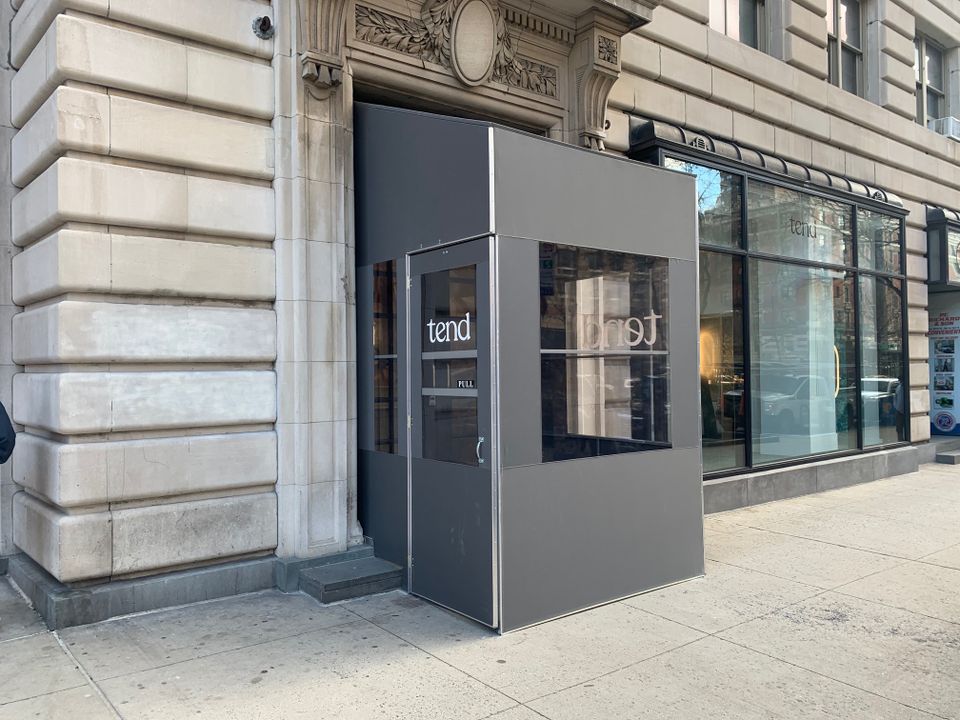
Grey aluminum framed vestibule with clear panels and white vinyl door lettering at the entrance of a limestone building

Built for the entrance you have

Every entrance is different, and the vestibule should work with the sidewalk, doors and windows you already have. Narrow brownstone entrances usually call for a slim enclosure. Busy corner restaurants often need something wider and more open. Offices, clinics and studios tend to suit a clean, minimal design.

Some businesses want a sturdier vestibule that blocks winter wind and still handles spring showers. Others prefer something lighter that comes down in the drier months. Either way, the vestibule should line up with the awning and the sign. That means heights that flow from one to the next, matching colors, and the logo carried through, so the storefront reads as one design.

It also has to follow the rules. A vestibule has to stay within the allowed projection from the building, keep exits clear, and sometimes needs to be removable depending on the building and the landlord. Planning how and when it goes up and comes down is part of the design.
See Our Awnings

A seasonal checklist

A quick walk through each season keeps small problems from turning into repairs:
 
  • Late summer: check the drains and floor before the heavy rain season and clear out any debris
  • Fall: check the weatherstripping, door sweeps and sealant before the first freeze
  • Winter: watch for salt buildup, slush, and any new leaks or drafts
  • Spring: look for damage from snow, ice and plows near the curb

On each walk through, look for spots where water sits longer than it should, flooring that feels slick, loose thresholds or gaps between parts, cracked or missing sealant, and any sign of rust, bubbling paint or a musty smell.

Line the upkeep up with your busy seasons. Back to school and the holidays mean more traffic, longer hours and more deliveries, so the doors open more and the floor gets wetter. Small upgrades like better mats, a second drain in a known trouble spot, or door closers that shut promptly all help.

Frequently asked questions

How does a vestibule keep an entrance dry?

It blocks wind, rain and snow from blowing straight through the front door, and it gives water from umbrellas and shoes a place to collect and drain instead of spreading across the floor inside.
 

How do you add drainage to a vestibule?

Usually with a slight slope in the floor that sends water to a drain, either a drain at the threshold or a linear trench drain at the door line. Any connection to the building's drains has to be planned and approved in advance.
 

What flooring works best in a rain and snow vestibule?

Textured aluminum or steel plate, wet rated rubber or vinyl treads, and commercial entrance mats that absorb water. The safest setup covers the whole walking path, with mat edges secured so they don't curl or shift.
 

Why do vestibule drains clog in winter?

Salt, slush and sidewalk dirt build up on the grates and block them. Grates that lift out easily and a quick cleaning after each storm keep the water moving.
 

How do I make a vestibule look like part of my storefront?

Match its colors and materials to your logo, awning and sign, and use the same lettering on the doors. Clear panels and good lighting keep it looking open and inviting in bad weather.
 

What's the difference between a seasonal vestibule and a longer term one?

A seasonal vestibule goes up for the wetter, colder months and comes down later. A longer term vestibule stays up for extended periods and is built for durability and a consistent look.

Ready for a drier entrance?

Tell us about your storefront and what happens at the door when it rains. We'll follow up to go over options and provide a clear, detailed quote.
Get a Quote