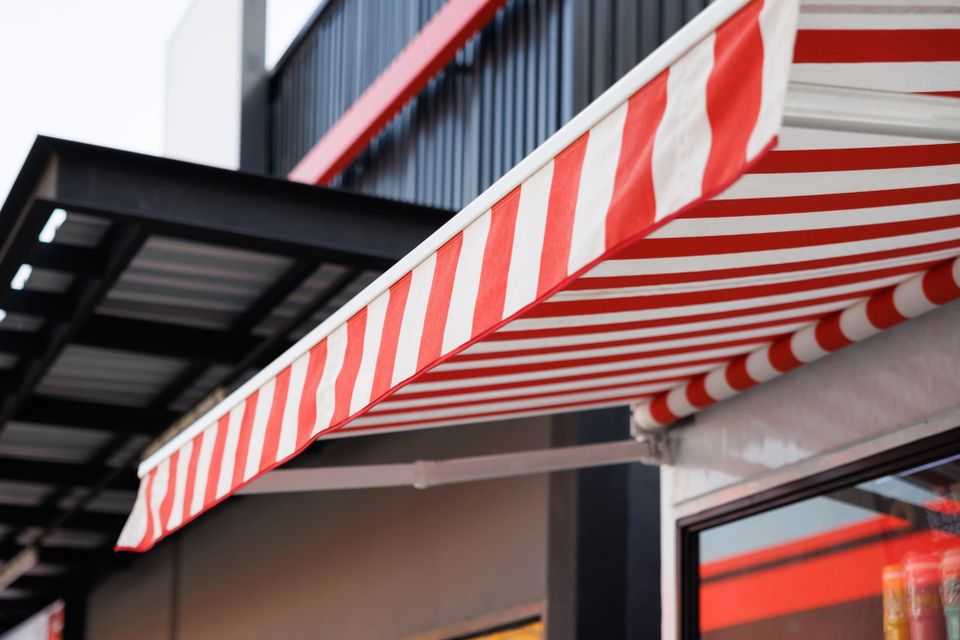
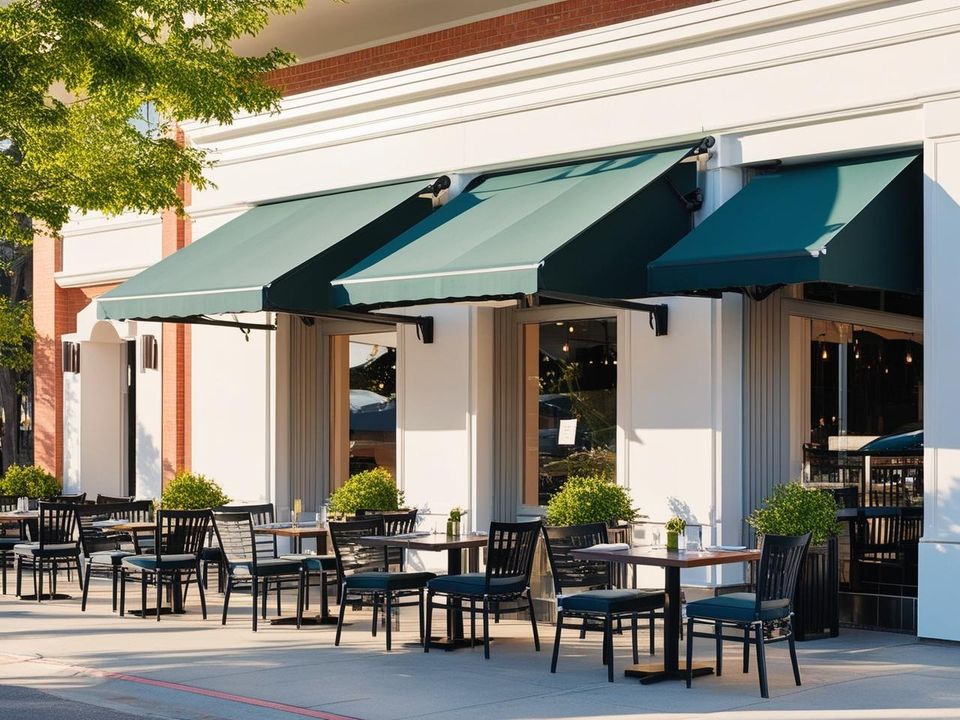
In New York City, you cannot just hang any size awning at any angle and call it a day. Different blocks and building types can affect what is allowed, including how far the awning can project, how large the signage can be, and how it connects to the facade.
Key things to think about include:
- Local codes that set rules on awning height and projection
- Landmark or special district rules in some Brooklyn neighborhoods
- Any building-specific limits set by owners or management
Your sidewalk and street layout also shape the design. Narrow sidewalks, large trees, bike racks, outdoor sheds, and bus stops can limit where posts go and how low the awning can hang. Curbside dining structures may need their own cover that lines up with or complements your main storefront awning, without blocking sightlines for drivers or people crossing the street.
Safety should always stay at the top of the list. That means:
- Strong anchoring into the building or ground
- Flame-resistant materials where required
- Clear paths for guests and staff to enter and exit
- No low edges or posts that trip pedestrians or hide street signs
As a local fabricator, we help restaurants balance big ideas with what is actually allowed. We handle careful measurements, give guidance on permit needs, and install with city conditions in mind. Poorly planned awnings that are too large, mounted too low, or supported with posts in the wrong place can lead to violations or forced removal later on.