Skip to content

NYC Summer Vestibule Operations Playbook

Keep entrances cool and efficient with daily tips for a vestibule in NYC, including queue flow, door hold-open plans, and odor prevention routines

Keep Your Summer Vestibule Running Smoothly

A vestibule in NYC works hardest in summer. Doors open nonstop, humidity creeps in, AC fights to keep up, and hot, tired customers crowd your entrance. If no one is managing that space, it gets sticky, smelly, and stressful very fast.

We see vestibules as part of daily operations, not just a weather shield or a nice-looking entrance. When that small space runs smoothly, lines move faster, guests feel cooler, and your storefront makes a strong first impression. This playbook focuses on what managers and staff can do every day to guide the flow, handle door habits, place stanchions and mats, move air, and keep odors and condensation under control.
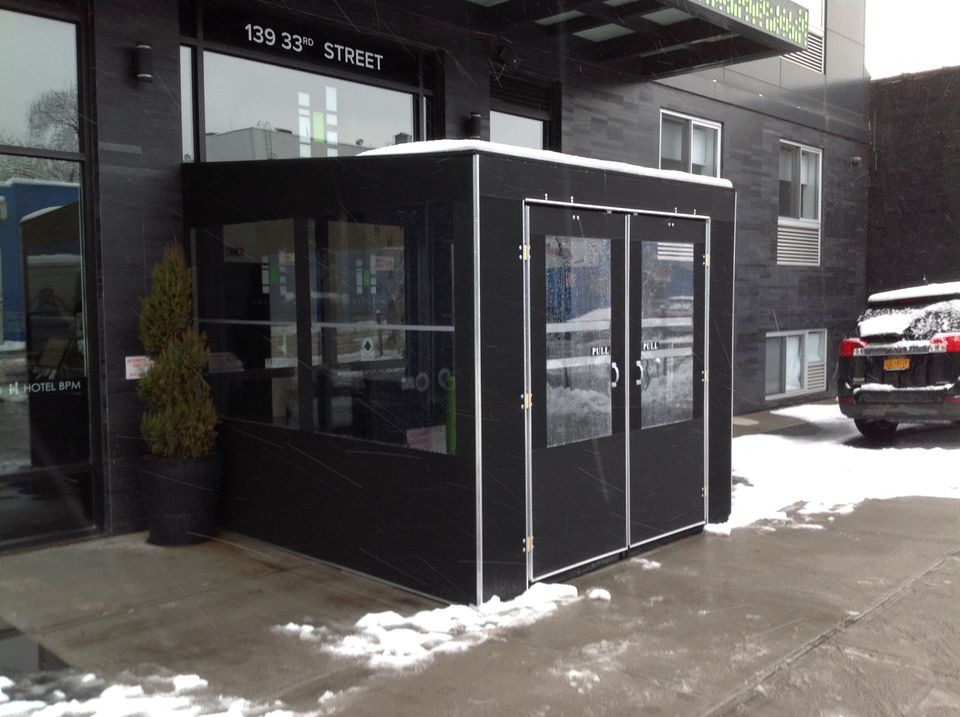
Black framed seasonal vestibule with double glass doors at a New York City building entrance, snow on the sidewalk

Controlling Queue Flow Before It Backs Up on the Sidewalk

A good summer queue pattern starts with a clear swing zone. The first guest should be close to the vestibule door, but not so close that the door hits them or has to squeeze past. The line should grow back along a wall or rail rather than pushing straight out into the sidewalk, and any overflow should form in one clear direction, away from neighboring doors.

A simple setup looks like this:

 
  • Clear half-circle in front of the door for safe opening
  • First guest stands just outside that arc, facing inside
  • Line grows back along a wall or rail, not straight out into the sidewalk
  • Overflow line forms in one clear direction, away from neighboring doors

To keep it consistent day to day, give staff repeatable instructions. When greeting the next guest, point to a floor marker and say, “Please wait by the sign, not in front of the door.” During rush periods, it also helps to assign one person to keep the entrance clear and to remind guests not to block nearby businesses or building doors.

Helpful tools for guiding that flow:

 
  • Low-profile floor decals marking “Start Here” and “Please Leave Door Area Clear”
  • Wall-mounted arrows or simple “Line Forms This Way” signs at eye level
  • Verbal reminders during peak times, especially when the line reaches the sidewalk

When your team uses the same language every day, customers quickly learn the pattern and the vestibule stays open and safe.

Smart Door Hold-Open Habits That Manage Heat and Traffic

In summer, a vestibule in NYC can trap hot, humid air. But swinging doors wide open all day ruins your AC and can pull in street odors. The key is knowing when to keep doors shut tight and when to open them briefly.

Keep vestibule doors closed when:

 
  • Heat index is high and AC is already struggling
  • You notice food smells or trash odors drifting in from the street
  • There is heavy traffic noise or exhaust right at your entrance

Use short hold-open periods when:
 
  • The vestibule feels stuffy between rushes
  • The line has backed up and people look overheated
  • You need to clear out cooking or cleaning smells that settled in the entry

Daily staff guidelines can stay straightforward. During a rush, hold the inner door open just long enough for small groups to move through, then let it close and latch. Coordinate with security or hosts so only one door is held open at a time, and never let a door rest against a stanchion or mat where it can rebound or fail to close.

Support these habits with hardware and checks:

 
  • Set door closer tension so doors do not slam, but also do not stay half-open
  • Use approved hold-open devices where allowed, instead of wedges or trash cans
  • Do a quick morning and mid-shift door check: open, close, latch, and listen for scraping on floors or mats

When doors behave the same way every day, staff can focus on people, not fighting the hardware.

Using Stanchions and Matting to Protect Floors and Air Quality

Good stanchion placement turns a cramped vestibule into a clear path. The goal is to guide people safely from the sidewalk to host, counter, or elevator, without crowding glass or tight corners.

Use stanchions to:

 
  • Keep guests away from glass panels and window displays
  • Prevent lines from wrapping into blind corners
  • Create one direct “lane” from the outside door to the service point
  • Separate entering and exiting traffic if space allows

Matting is just as important in summer as it is in winter. Sweat, street grime, and surprise rain showers end up on your floors and in your air, so it helps to set up a simple, layered approach from the outer door inward.

Build a simple mat strategy:

 
  • Scraper mat outside or right inside the outer door to grab grit from shoes
  • Moisture-absorbing mat closer to the inner door, ready for sudden rain
  • Low-profile interior mat inside the main space to reduce slips without catching toes

To keep the setup working, add a few quick checks to opening and closing. Shake out or vacuum mats to remove dust and food crumbs that can cause odors, realign stanchions so belts are straight and not blocking door swings, and look for curled mat edges or loose bases that can trip guests or catch door bottoms.

Small, steady attention keeps the vestibule clean, safe, and easier to breathe in.

Mint green custom vestibule with glass panels and a double door at the Ladurée storefront, matched to the facade color beneath gold dimensional lettering

Ventilation and Daily Checks to Fight Odors and Condensation

Summer turns your vestibule into an odor magnet. Warm air, wet umbrellas, damp mats, food smells, street exhaust, and hot bodies in close quarters will build up if there is no simple plan. A reliable approach is to create a repeatable ventilation rhythm, especially around your busiest periods, and pair it with quick visual checks of the surfaces guests notice first.

Create a peak-hour ventilation rhythm:

 
  • Crack or fully open one door between rushes to let heat escape
  • Use a small, quiet fan aimed across the floor, not straight at guests
  • If you have an air curtain, make sure it is on and blowing in the correct direction
  • Coordinate with HVAC so the front is not freezing while the vestibule feels like a sauna

Daily inspection and cleaning in the vestibule should focus on what guests notice first:
 
  • Wipe glass inside and out to cut fingerprints and reduce fogging
  • Look for condensation on metal, thresholds, and tile or stone floors
  • Empty small trash cans near the entrance before they start to smell
  • Spot-clean spills, sticky spots, or tracked-in food right away
  • Use neutral cleaners that will not fight with your food or coffee aromas

These habits are quick but powerful. When the entry smells fresh and looks dry, guests relax faster and lines feel shorter.

Five-Minute Daily Vestibule Checklist Your Team Will Actually Use

To make all this work, turn it into a short, clear checklist that fits into normal shifts. The vestibule only needs a few focused passes each day, as long as the responsibilities are assigned and the same standards are followed consistently.

Morning prep:

 
  • Clear the door swing zone and set floor markers
  • Place stanchions and test the line pattern
  • Lay down mats, check for curls, and make sure doors glide over them
  • Open and close each door, confirm smooth closing and full latching

Mid-shift reset:
 
  • Realign the line and remind guests where to stand
  • Shake or vacuum mats if they are visibly dirty
  • Crack a door or run a fan between rushes to dump built-up heat
  • Wipe obvious smudges on glass and check for condensation or damp spots

Closing walk-through:
 
  • Remove or hang stanchions where they belong
  • Roll up or clean mats so they dry fully overnight
  • Check for loose screws, sticky hinges, or damaged signs
  • Note any problems, like a dragging door or cracked base, so they get fixed before the next hot day

Assign these tasks to a host, shift lead, or manager, and keep a simple log so issues do not get ignored. With consistent daily care, your vestibule in NYC becomes a quiet workhorse that supports comfort, safety, and smooth service, all summer long.

Get Started With Your Project Today

If you are ready to upgrade your entry with a custom vestibule in NYC, our team at SignIt NY is here to help you plan every detail. We work closely with you to match your building’s architecture, neighborhood requirements, and weather protection needs. Tell us about your project and timeline, and we will provide clear recommendations and a straightforward quote. Have questions or need design guidance first? Simply contact us and we will walk you through your options.
Get a Quote