Skip to content

Winter Enclosures for NYC Restaurants

How to build an enclosure diners notice, remember and want to sit in.

Make the enclosure part of the restaurant

A winter enclosure does more than get a restaurant through the cold months. On a freezing night, with people walking fast and heads down, a warm, glowing enclosure is often the reason someone stops, looks up and walks in.

Winter setups used to be plastic tents thrown together to survive snow and wind. Diners expect more now. The right enclosure feels like part of the dining room, part of the brand and part of the street. It deserves the same attention as any other design decision, made early rather than at the last minute.

People decide quickly in the cold. From across the street, or from the back of a cab, they pick up a few cues: a color that stands out without clashing with the block, lighting that looks warm rather than harsh, and a structure that looks solid and cared for. An enclosure that's sagging, cloudy or crowding the sidewalk sends them somewhere else.
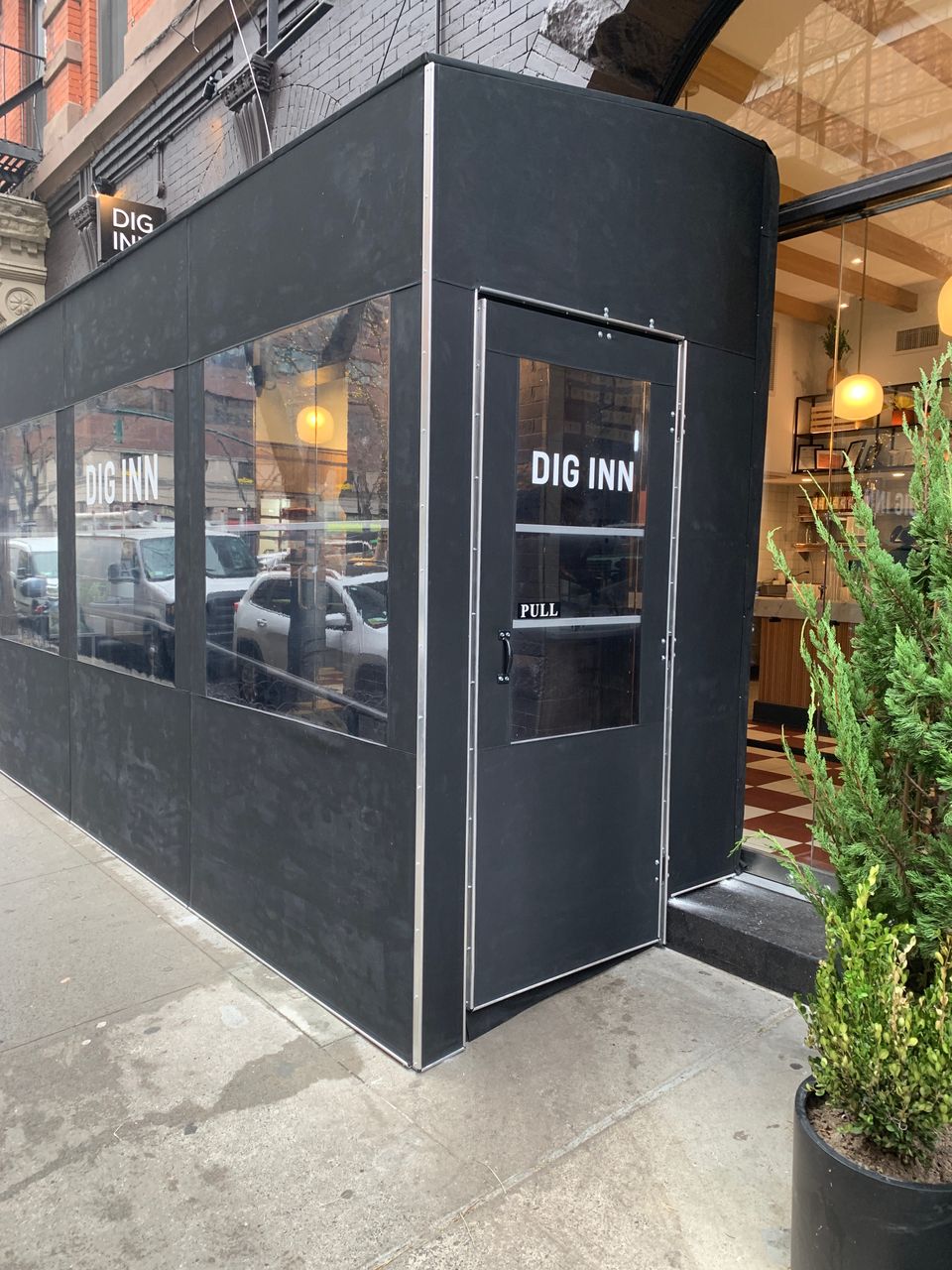
Black seasonal vestibule with clear panels and a door reading Dig Inn built out onto the sidewalk in front of a restaurant

What diners notice first

The first thing people notice is whether they can see in. Clear, sharp panels show a busy room, heaters doing their job, and people who look comfortable. Cloudy, scratched or yellowed panels make the space feel closed off, and people want to know what they're walking into.

Comfort cues come next. Even before they feel the heat, guests look for signs they won't be cold through dinner:

 
  • Heaters placed safely and evenly where people can see them
  • Panels and seams that block the wind instead of flapping in it
  • Doors that close snugly without big gaps
  • Tables set back from drafty openings

Details like these are the difference between a guest who orders another drink and one who asks for the check early.
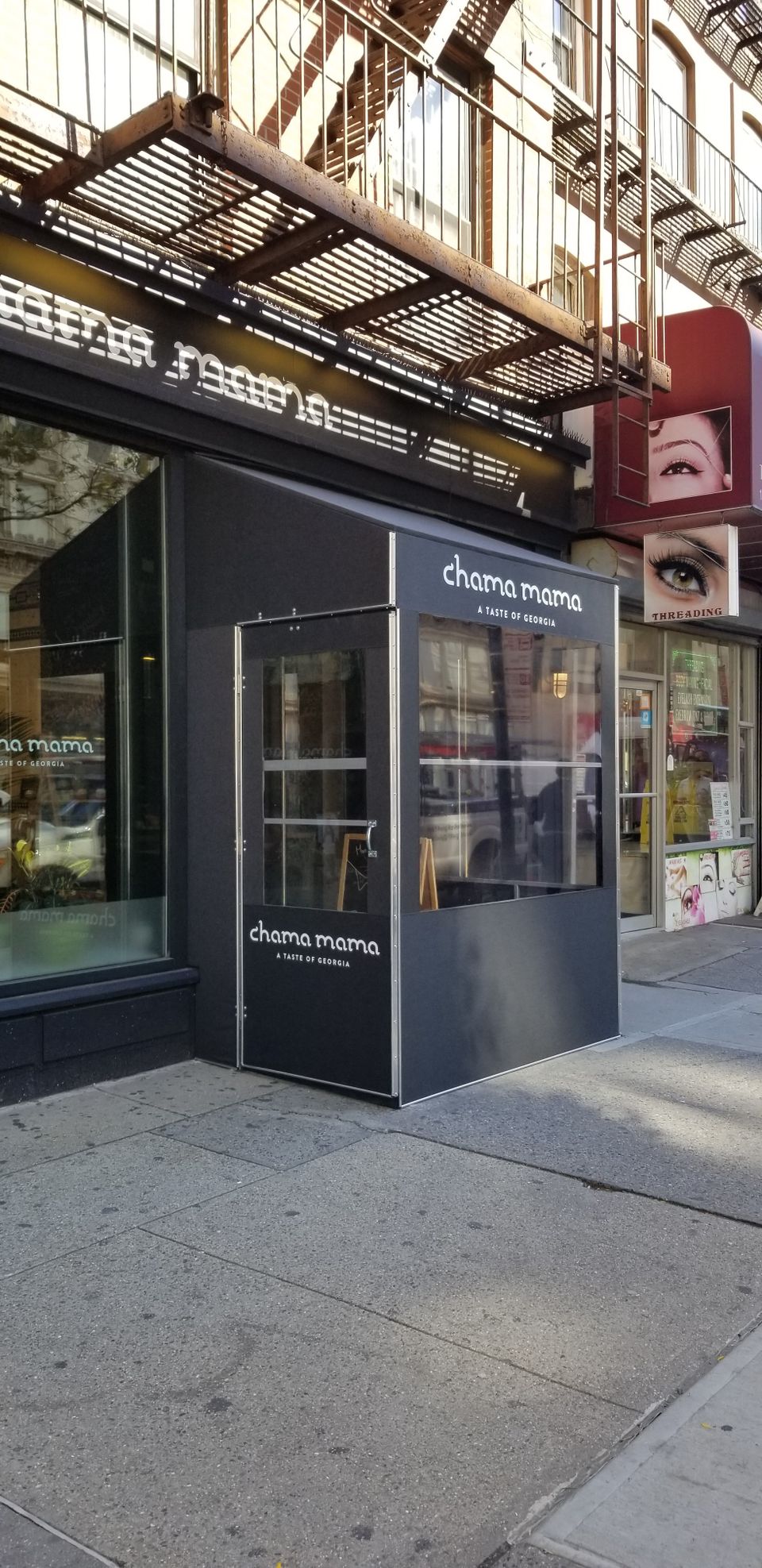
Chama Mama, Manhattan. Branded seasonal vestibule.

Put your brand on it

An enclosure is prime space for branding. Print the logo on panels, doors or valances, match the colors to the storefront and the awning, and keep the graphics simple rather than busy. Pick lighting that looks good in photos at night, too. When guests post a picture, your name and colors should be easy to recognize, and a branded entry panel or a lit logo on a side wall goes a long way.

Stand out without shouting. Colors that suit the block, heights that line up with the neighbors, and clean sightlines keep the street looking put together. Your branding and lighting are what make the place recognizable.
See our Vestibules
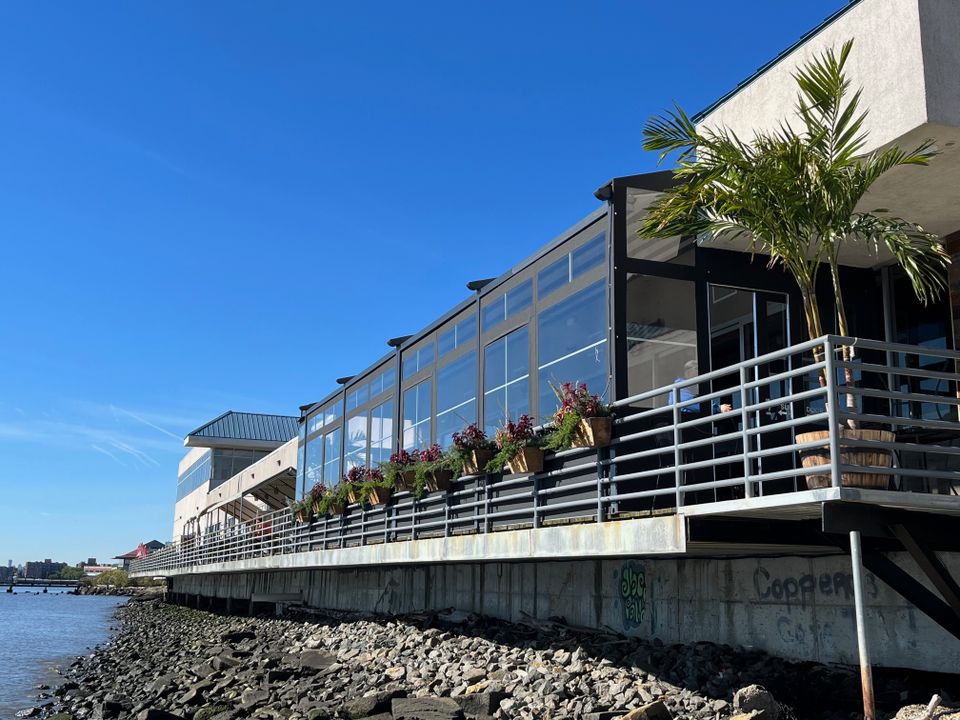
Glass paneled winter enclosure with a black aluminum frame running the length of a waterfront restaurant deck

An enclosure that works past winter

With some planning, a winter enclosure can earn its keep in spring and fall too, with small changes instead of a rebuild. Modular or removable parts let you:

Swap solid panels for screens when the weather softens
Open or close sections depending on wind and rain
Move the entrance to suit how people come and go in warmer months

Materials decide how long it keeps looking good. Sun, wind and snow are hard on weak fabric and hardware. Strong frames, UV resistant vinyl and reliable zippers or door hardware keep the enclosure from warping, fading or cracking, so it looks the same every season.

Plan the layout to change with it too: two-tops one month, a long communal table the next, a few private corners for date nights, or standing room for quick bites and events.

Sidewalk rules and real-world logistics

A good design still has to work on a real New York sidewalk. Before anything is built, think about:
 
  • Enough sidewalk clearance for pedestrians to pass safely
  • Clear paths for staff carrying food, drinks and supplies
  • Easy routes for trash and deliveries
  • Sightlines that don't block the storefronts next door

There are also rules on sidewalk structures, fire safety and access. Exits, visibility and ADA access decide where the doors go, how wide the paths need to be, and how much space you can actually use.

Plan for the weather and the calendar too: how long setup and takedown will interrupt service, where snow will fall and how it gets cleared, how the enclosure handles strong wind, and where the panels and hardware get stored between seasons.

Start planning before it gets cold

Design, measurements, approvals and fabrication all take time, and a lot of restaurants are planning at the same time. Starting in the warmer months gives you more options and a lot less stress when the temperature drops.

A simple checklist to start with:

 
  • Your look: colors, logo placement and the overall feel
  • Your space: available width, depth and height limits
  • Comfort: type of heat, door style and draft control
  • Seating: tables, a bar rail, a waiting area or a mix
  • Inspiration: photos of enclosures and streetscapes you like

Frequently asked questions

What is a restaurant winter enclosure?

A covered outdoor dining structure that protects guests from cold, wind, rain and snow. In New York it also works as a visible extension of the dining room, the storefront and the brand.

Why do diners notice some enclosures and walk past others?
People make quick decisions in the cold, and a warm, well lit enclosure signals comfort from a distance. Clear panels, inviting light and a clean structure look more welcoming than a cloudy or neglected setup.
 

How do I make an enclosure feel warmer?

Safely placed heaters, tightly sealed panels, doors that close securely, and seating kept away from drafts. Warm lighting and heaters guests can see reassure them before they sit down.
 

What's the difference between a winter tent and a branded enclosure?

A basic tent is purely functional and often looks temporary. A branded enclosure uses matching colors, logos, clear panels, lighting and a thoughtful layout, so it feels like part of the restaurant.
 

Can a winter enclosure be used in more than one season?

Yes. Modular panels, durable materials and branding that works year round let it adapt to spring and fall instead of sitting idle.

Planning your winter enclosure?

Tell us about your restaurant and the space out front.
We'll follow up to go over options and provide a clear, detailed quote.
Get a Quote