Skip to content

Brooklyn Permits: Signs, Awnings and Sidewalk Dining

What to check before a sign, awning or outdoor dining setup goes up.

Check the rules before you drill

Putting up a storefront sign in Brooklyn takes more than hanging it and flipping on the lights. The streets are dense, the sidewalks are tight, and a lot of blocks have historic buildings and shared walls. The city wants signs that are safe, that don't block people walking by, and that fit the neighborhood.

Skip the rules and the city can issue fines or a stop work order, or make you take down a brand new sign. That can push back an opening and cost real money. The most common problems start when a sign is ordered before anyone checks. The holes get drilled, the sign goes up, and then someone notices the building is landmarked or the sign hangs too low over the sidewalk. By then you're paying for removal and corrections instead of a quick fix.

Who has a say

Several agencies can be involved, and each one looks at something different:
 
  • NYC Department of Buildings (DOB) reviews structure, building safety and electrical work
  • Landmarks Preservation Commission (LPC) reviews historic districts and landmarked buildings
  • NYC Department of Transportation (DOT) covers sidewalks and anything that projects over the public way
  • Business Improvement Districts sometimes set design guidelines for certain corridors

Sidewalk dining brings in two more. The Department of Health (DOHMH) covers outdoor food service, and the Fire Department (FDNY) covers exits, heaters and electrical.

One project can need more than one approval. A large projecting sign can bring in DOB for the structure, LPC for the design if the building is in a historic district, and DOT for how far it hangs over the sidewalk. Awnings and vestibules can hit the same mix, which is why the sign type and placement should be settled early.

When a sign needs a DOB permit

Many storefront signs in Brooklyn need a DOB permit before they go up. The city looks most closely at:
 
  • Larger signs
  • Illuminated signs, especially ones that need new electrical work
  • Signs with structural supports like steel framing or heavy brackets
  • Hanging and projecting signs attached to the building face
 
The usual path is a site survey to measure the facade and sidewalk, then drawings showing size, mounting and lighting, then a filing with DOB, usually by a licensed professional. After that come any inspections and a final sign off once the sign is installed.

Timing matters. Filings pile up in late summer and early fall as everyone tries to get a storefront ready for the holidays, and review times stretch. Starting early leaves room for questions and revisions without pushing back an opening.
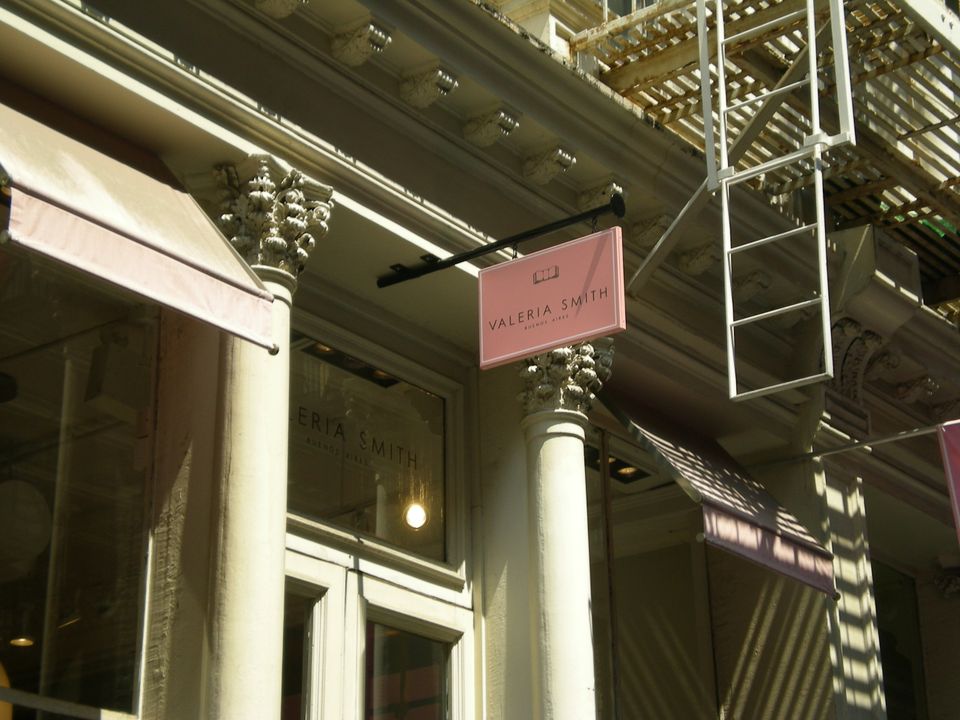
Pink pan-formed blade sign projecting from a cast-iron SoHo facade above a boutique entrance

Landmark district rules

If the storefront is in a historic district or a landmarked building, LPC will likely review the sign. Large parts of Brooklyn are protected, especially older brownstone and row house blocks like Brooklyn Heights, Park Slope and Greenpoint.

LPC generally looks for:

 
  • Materials that suit the building, like metal, wood or higher quality finishes
  • Modest lighting that doesn't overpower the facade
  • A reasonable size and simple placement that doesn't cover architectural details
  • Respect for original features like cornices, brickwork and stone trim

Changes that commonly trigger a review include replacing an old plastic box sign, adding or changing an awning that covers moldings or trim, adding a vestibule or storefront framing that touches the sidewalk, and drilling into decorative stone or brick. A design that fits LPC's expectations from the start usually moves faster.
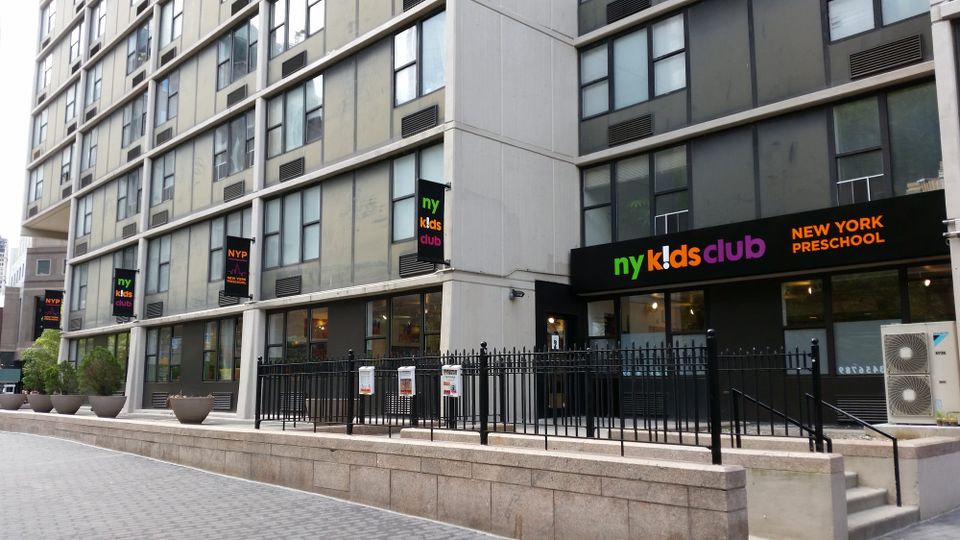
Row of NY Kids Club flag signs projecting along a building facade above a New York Preschool storefront sign in Battery Park

Sidewalk clearance and projection

Anything that hangs over, touches or sits on the sidewalk gets DOT's attention. That includes blade and hanging signs, awnings that drop too low or stick out too far, vestibules on the sidewalk, and signs near poles, hydrants, bike racks or bus stops.

Plan for three things:

 
  • Minimum height over the sidewalk, so people can walk under safely
  • Maximum projection, meaning how far a sign or awning can extend from the building
  • Setbacks from curbs, corners, driveways and crosswalks

A vestibule or weather enclosure for the colder months needs the same planning. Even temporary structures have to meet standards for width, door swing, sightlines and clearance.
See Our Hanging Signs

Choosing a sign type that fits the street

The type of sign you choose can make the permit simple or complicated. Common options in Brooklyn:
 
  • Flat fascia signs mounted above the entrance
  • Blade signs that stick out from the facade so people see you from down the block
  • Illuminated channel letters
  • Awnings, fabric or rigid, often with printed graphics
  • Vestibules for weather and comfort at the door

When we plan a sign, we look at sidewalk width and foot traffic to decide between a flat sign, a blade sign or both. We also look at lighting, choosing lower glare LEDs and careful placement, and at scale compared to the building and the neighbors. Mounting has to avoid damaging key architectural details.

You still want to stand out in a long row of stores. Strong lettering, clear color and well placed lighting can do that while staying inside DOB, LPC and DOT rules.
See Our Services
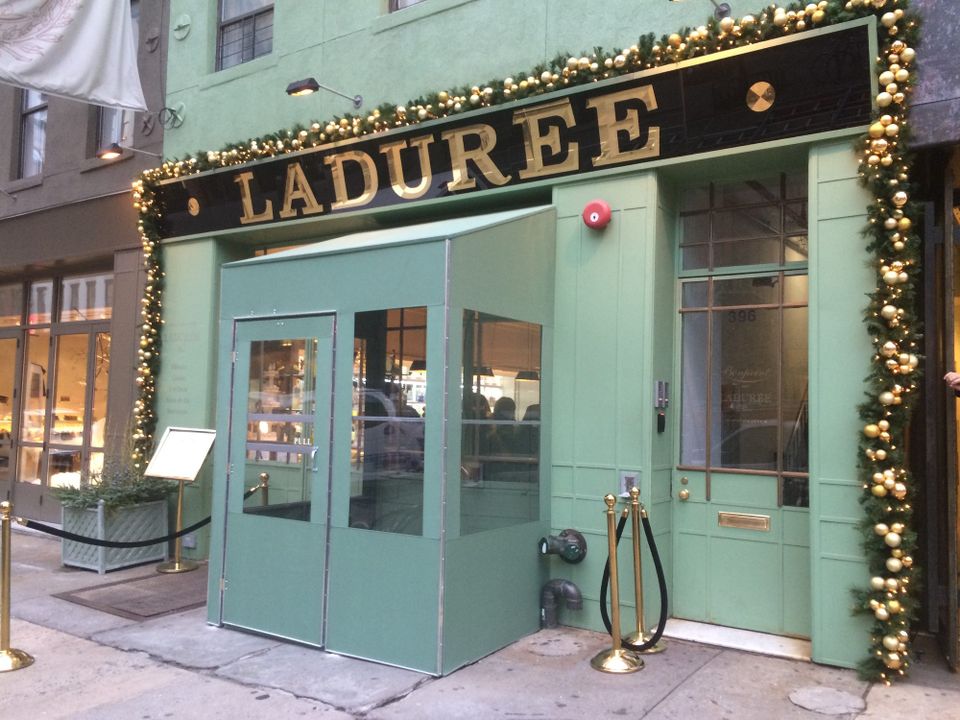
Mint green custom vestibule with glass panels and a double door at the Ladurée storefront, matched to the facade color beneath gold dimensional lettering

A checklist for sidewalk dining awnings

Since the city updated its outdoor dining rules, sidewalk setups get a lot more attention from inspectors. Awnings, posts, planters and tables all share the same narrow strip of sidewalk, and getting the clearances wrong is one of the fastest ways to fail an inspection. Plan for:
  • The unobstructed sidewalk width that has to stay open to the public
  • Clear space on each side of building entrances and fire exits
  • Emergency exits kept fully clear from the door to the street
  • Fire resistant awning fabric where required, and heaters, lighting and electrical that meet code
  • An accessible route with enough clear width, gentle ramps where there's a step, headroom under the awning, and some tables a wheelchair can pull up to

Most sidewalk dining awnings need more than one approval: DOT authorization to use the sidewalk, a DOB permit for the awning structure when it meets certain size or support conditions, and sometimes community board or landmark approval. Expect insurance requirements too, which can include naming the City of New York as an additional insured. Once everything is up, keep a copy of the approved plans on site. Inspectors most often flag clearances smaller than on the plan, awnings that project too far, and blocked hydrants, crosswalks or exits.
See Our Awnings

A realistic timeline

Month 1: Concept and compliance check

Measure the sidewalk and note the poles, trees and grates nearby. Photograph your storefront and the buildings on both sides. Meet with a sign and awning company, and your architect if you have one, to flag problems early. Checking your lease for landlord sign limits and whether the address is in a landmark district belongs here too.


Months 2 and 3: Design and permit filings

Settle the dimensions, materials, colors and graphics, and plan the table layout around any posts. Gather measured drawings, photos and insurance certificates, then file with the agencies involved. Leave time for comments and small changes.
 

Months 4 and 5: Approvals, fabrication and installation

Answer review comments quickly. If an agency asks for a small change in projection or a little more clearance, adjusting is usually faster and cheaper than arguing. Get written approval before fabrication, schedule the install for off hours, and leave a buffer for weather and rescheduled inspections.
 
For outdoor dining that's ready for warm weather, start the checks in late winter or very early spring. Starting on the first warm weekend usually costs a big part of the season.

Frequently asked questions

Do I need a permit for a storefront sign in Brooklyn?

Often, yes, especially for larger signs, illuminated signs with new electrical work, and signs with structural supports. DOB may require a filing, inspections and a final sign off.


What's the difference between DOB, LPC and DOT approval?

DOB reviews structure, attachment and electrical work. LPC reviews design and materials in historic districts and landmarked buildings. DOT covers anything that projects over or affects the sidewalk.


How do I know if my shop needs LPC approval?

If the storefront is in a historic district or a landmarked building, LPC will likely review the sign. Changing an existing sign type, adding or changing an awning, and drilling into decorative brick or stone are common triggers.


Which agencies regulate sidewalk dining awnings?

DOT covers sidewalk use and DOHMH covers outdoor food service. DOB may review how the awning is supported and attached, and FDNY covers exits, heaters and electrical.


Why do permits take longer in late summer and early fall?

Filings spike as businesses try to open or refresh their storefronts before the holidays. Starting early leaves room for longer reviews and revisions.


Is a retractable awning easier to get approved than a fixed one?

A retractable awning blocks less when it's closed, but it still has to comply when it's extended, and its mounting and projection can still be reviewed. A fixed awning has to meet clearance rules year round.

Planning a sign or awning in Brooklyn?

Tell us about your storefront and what you have in mind.
We'll follow up to go over options and provide a clear, detailed quote.
Get a Quote